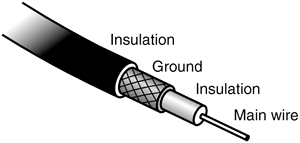
Networks can use two types of coaxial cabling: thin coaxial and thick coaxial. Both have fallen out of favor, but you might still encounter thin coax in your travels.
Thin Coax
Thin coax is much more likely to be seen than thick coax in today's networks, but it isn't common, either. Thin coax is only .25 inches in diameter, making it fairly easy to install. Unfortunately, one of the disadvantages of all thin coax types are that they are prone to cable breaks, which increase the difficulty when installing and troubleshooting coaxial-based networks.
There are several types of thin coax cable, each of which has a specific use. Table 2 summarizes the categories of thin coax.
|
Cable |
Type |
|---|---|
|
RG-58 /U |
Solid copper core |
|
RG-58 A/U |
Stranded wire core |
|
RG-58 C/U |
Military specification |
|
RG-6 |
Used for cable TV and cable modems |