What Sort of Person Should You Look For?
Generally, if we're looking to recruit great developers, we look for people with a good track record in development. It's up to you to decide whether the developer's experience should be in, say, Visual Basic or in Java (that is, whether it's "the brain" and general programming experience you're seeking or whether it's all of the above) combined with experience in the language you're using. When we're recruiting Visual Basic developers we normally expect them to have extensive knowledge of Visual Basic, although if the person were exceptional in every other area, we'd almost certainly take them on and give them the necessary training. The best developers are generally those with logical, methodical minds. They're also usually thoughtful, precise, and, we hope, not impulsive-the best developers think first and act later. We're after the people who think algorithmically (people that understand the necessity of a good algorithm and have the wherewithal to implement it), which is not to say that they should think only in algorithms. A thorough knowledge of algorithms is useful but can always be replaced by someone who "thinks right" and who knows where to look for an existing algorithm.
We are also after people who are in tune with our culture. For TMS, this means they should be first and foremost a team player. If they use too many "I"s instead of "we"s, we have to consider whether they are more comfortable going solo. We have to feel they will fit in with the rest of the family.
Remember that technical people are a bit different from other staff. Typically they'll want plenty of exposure to the new technologies, such as Visual Basic 6, as well as having some fun while they're at it. Technical people tend to hate bureaucracy, administration, and filling out forms-they can also be harder to manage.
Soft skills (such as interpersonal relations, communication skills, and so forth) are also vital. It's important to be presentable, personable, and coherent.
These are some of the things that we think about. What's important to you? Be clear about what you want.
Qualifications
The qualifications you seek depend on your own personal or company preferences, so, as always, we speak here from our own experiences at TMS. In an ideal world all applicants are vastly experienced and well qualified. Often, obviously, this isn't always the case.
Naturally we look for experienced and capable developers first. If the candidates are well qualified, it's a bonus, but we don't discount people who fail to meet some sort of qualification threshold. However, we consider a degree a plus and we're particularly interested in someone with a relevant degree, preferably in computer science or mathematics.
Having a degree versus not having one If someone has an advanced degree it normally means that they have a proven ability to solve complex problems and absorb information (although we've seen some interesting exceptions). Somebody with a degree naturally carries more credibility than someone who doesn't have a college degree, and a college graduate is generally easier to propose to our clients.
Of course, the best person for the job isn't necessarily the most academically qualified-after all, a degree from the University of Hard Knocks usually means the candidate has pragmatic skills and we all know that true wisdom is the actual application of learned knowledge, not just knowledge per se. That said and human nature being what it is, however, it's often the most academically qualified person who will get the first interview. The bottom line is that having a degree helps, whereas not having one probably hinders, everything else being equal.
MCP certification Microsoft Certified Professionals (MCPs) have a proven level of competence with Microsoft technologies and tools, so certification is usually viewed as a positive attribute. As a services company, we find an MCP certification is a positive sales feature. However, don't rely on it too much. Conduct your own independent skills assessment.
In summary
Ideally we'd all like to hit what we call "the red zone"-well qualified, lots of experience, and good personal skills. (See Figure 17-1.)
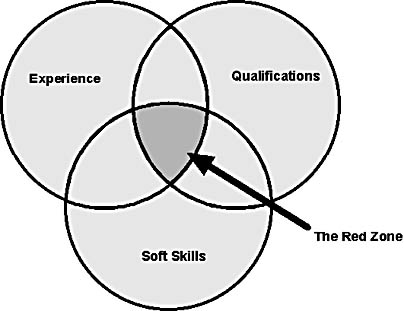
Figure 17-1 Nerdvana: the ideal skill set
But what's ideal for your organization is for you to decide. Which of the three qualifications is most important to you? Brainstorm about what you want and then move on.